
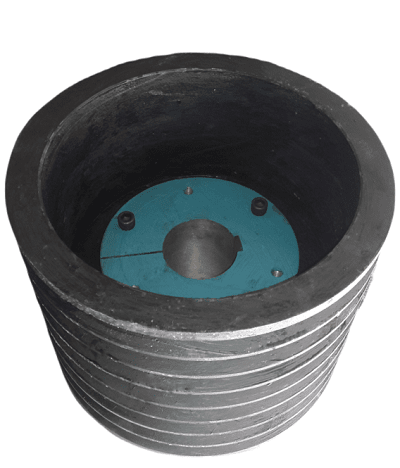
In conveyor systems, one wrong pulley selection can lead to belt slippage, uneven wear, bearing failure, and repeated downtime. Since conveyors often operate continuously under varying loads, choosing the correct taper lock pulley is critical for stable performance and long service life.
This guide explains how to select the right taper lock pulley for conveyor drive applications, whether you are designing a new system or replacing an existing pulley.
Why Conveyor Pulley Selection Is Critical
Conveyors work under constant load and often in dusty, heavy-duty environments. A poorly selected pulley can cause:
- Frequent belt adjustments
- Power loss
- Increased motor load
- Premature bearing damage
- Unexpected shutdowns
Correct pulley sizing improves traction, reduces maintenance cost, and increases overall conveyor efficiency.
Step 1: Identify Conveyor Application Type
Before selecting a taper lock pulley, determine:
- Type of conveyor (belt conveyor, roller conveyor, inclined conveyor)
- Nature of material (bulk, packaged, abrasive, heavy load)
- Operating hours (continuous or intermittent)
- Environmental conditions (dust, moisture, heat)
Heavy-duty bulk material conveyors require stronger pulleys than light packaging conveyors.
Step 2: Calculate Power and Torque Requirement
Start with motor specifications:
- Motor power (kW or HP)
- Motor speed (RPM)
- Conveyor speed requirement
Use the torque formula:
Torque (Nm) = (9550 × Power in kW) ÷ RPM
Then apply a service factor:
- Light duty: 1.2
- Medium duty: 1.4 – 1.5
- Heavy duty: 1.6 – 2.0
This adjusted torque determines the minimum load capacity your conveyor drive pulley must handle.
Step 3: Select Correct Pulley Diameter
Pulley diameter affects:
- Belt life
- Grip strength
- Power transmission efficiency
Larger diameters:
- Reduce belt bending stress
- Increase belt life
- Improve torque transmission
However, diameter must match belt profile standards (SPA, SPB, SPC, etc.) to ensure proper belt seating.
Step 4: Choose Proper Belt Section and Number of Grooves
For conveyor drive systems:
- Match groove profile with belt type
- Increase groove count for higher load transmission
- Ensure proper belt wrap angle
Insufficient wrap angle leads to slippage, especially under heavy starting loads.
Step 5: Verify Taper Lock Bush Compatibility
The taper lock bush ensures secure shaft mounting. For conveyor systems:
- Confirm bush size matches shaft diameter
- Ensure proper bore tolerance
- Tighten screws to recommended torque
A correctly fitted bush prevents shaft slippage and reduces vibration under continuous operation.
Step 6: Material Selection for Conveyor Pulleys
Most industrial conveyor pulleys are made from graded cast iron because it:
- Absorbs vibration
- Handles shock loads
- Provides structural stability
For extremely heavy-duty or impact environments, fabricated steel pulleys may be preferred.
Material strength directly impacts load capacity and durability.
Step 7: Consider Balancing for Medium to High Speeds
Long conveyors or high-speed systems require balanced pulleys to reduce:
- Vibration
- Bearing stress
- Noise
- Belt misalignment
Dynamic balancing improves smooth rotation and extends component life.
Step 8: Focus on Alignment and Installation Accuracy
Even the best pulley fails if installed incorrectly.
Ensure:
- Shaft alignment is precise
- Belt tension is correct
- Mounting surface is clean
- Bush screws are evenly tightened
Proper installation reduces maintenance frequency and improves conveyor reliability.
Step 9: Plan for Maintenance and Replacement
One of the advantages of taper lock pulley systems in conveyor applications is easy removal and replacement.
Benefits include:
- Faster maintenance
- No shaft damage during removal
- Reduced downtime
- Easier spare management
This makes taper lock systems ideal for production environments where uptime is critical.
Common Mistakes to Avoid
- Selecting pulley based only on diameter
- Ignoring service factor
- Using incorrect bush size
- Over-tightening or under-tightening screws
- Not considering belt wrap angle
Avoiding these mistakes ensures long-term conveyor performance.
Final Thoughts
Selecting the right taper lock pulley for conveyor systems is a technical decision that directly affects operational efficiency. Correct torque calculation, proper diameter selection, material strength, and accurate bush fitting are essential for smooth and reliable power transmission.
A properly selected conveyor drive pulley reduces downtime, extends belt life, and improves overall system stability. Investing time in correct selection today prevents costly failures tomorrow.
