
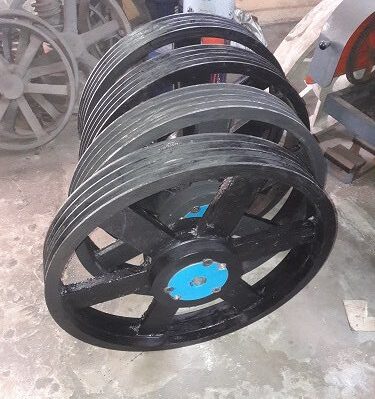
Original Equipment Manufacturers (OEMs) carefully select every component that goes into their machines. Their reputation depends on reliability, performance consistency, and low maintenance requirements. When it comes to power transmission systems, taper lock pulleys are often the preferred choice for industrial machinery.
But why do OEMs consistently favor taper lock systems over conventional pulley mounting methods? The reasons are both technical and practical.
1. Secure and Reliable Shaft Mounting
OEMs design machines to operate under varying loads and continuous duty cycles. A taper lock pulley provides a strong mechanical grip on the shaft through its tapered bush mechanism.
This system:
- Distributes clamping pressure evenly
- Reduces risk of slippage
- Minimizes keyway stress
- Handles torque fluctuations effectively
For OEMs, secure mounting means fewer warranty claims and improved machine reliability.
2. Standardization Across Multiple Models
OEMs often manufacture machines in different sizes and configurations. The taper lock bush system allows a single pulley design to fit multiple shaft diameters simply by changing the bush.
This offers:
- Design flexibility
- Simplified inventory management
- Reduced part variations
- Faster assembly
Standardization helps OEMs streamline production and reduce costs without compromising performance.
3. Faster Assembly During Manufacturing
Production efficiency is critical for OEMs. The taper lock system simplifies installation because it does not require special machining or force-fitting.
Benefits include:
- Quick mounting
- No complex press fitting
- Reduced assembly time
- Minimal risk of shaft damage
Faster assembly directly improves manufacturing throughput.
4. Easy Maintenance for End Users
OEMs consider not only manufacturing convenience but also field serviceability. Machines equipped with taper lock pulleys are easier to maintain.
Maintenance teams can:
- Remove pulleys using designated jacking holes
- Avoid hammering or heating
- Replace components quickly
Reduced maintenance complexity increases customer satisfaction.
5. High Torque Transmission Capability
Industrial machinery often operates under heavy loads or shock conditions. Taper lock pulleys are capable of transmitting significant torque due to their secure clamping design.
This makes them ideal for:
- Conveyors
- Crushers
- Compressors
- Mixers
- Heavy-duty drives
OEMs prioritize components that can handle demanding operational conditions.
6. Improved Alignment and Reduced Vibration
Precision-machined taper lock pulleys provide accurate concentricity between shaft and pulley. Proper alignment reduces:
- Vibration
- Bearing stress
- Belt wear
- Noise
Lower vibration levels improve machine life and operational stability.
7. Global Interchangeability
Taper lock bushes follow standardized dimensions in many regions. OEMs exporting machinery internationally benefit from globally available spare parts.
Interchangeability ensures:
- Easy replacement anywhere
- Simplified after-sales service
- Reduced dependency on proprietary parts
This global compatibility strengthens OEM market competitiveness.
8. Cost Efficiency Over Machine Lifetime
While taper lock systems may have a slightly higher initial cost than basic bore pulleys, they offer better long-term value.
OEMs benefit from:
- Fewer field failures
- Reduced warranty expenses
- Lower maintenance complaints
- Longer service intervals
Total lifecycle cost becomes more favorable.
9. Design Flexibility and Scalability
As machines evolve, OEMs may upgrade motors or modify performance requirements. The taper lock system allows easier upgrades without redesigning the entire drive assembly.
This scalability supports innovation while maintaining mechanical compatibility.
Final Thoughts
OEMs prefer taper lock pulleys because they combine secure mounting, flexibility, durability, and ease of maintenance. These advantages align perfectly with the priorities of industrial machinery manufacturers — reliability, efficiency, and long-term performance.
By integrating taper lock pulley systems into their designs, OEMs deliver machines that are easier to assemble, maintain, and operate under demanding industrial conditions.
