
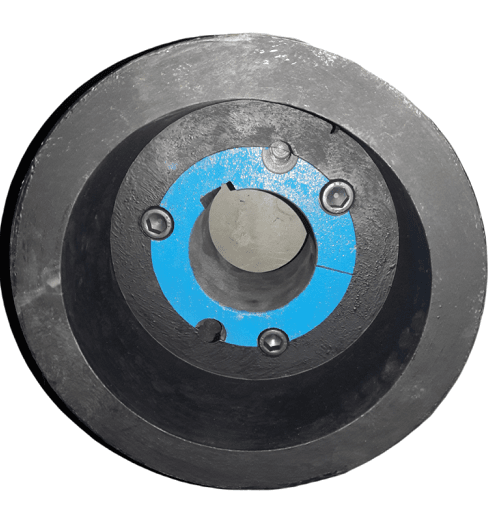
In 2026, industrial buyers are more cost-conscious than ever. When sourcing taper lock pulleys, price is important, but understanding what influences that price helps you make smarter purchasing decisions — not just cheaper ones.
This guide breaks down the factors that affect taper lock pulley cost and explains what you should look for before placing an order.
Material and Raw Material Costs
The base material of a pulley has the biggest influence on price. Common materials are:
- Cast iron – most economical and widely used
- Steel – stronger but more expensive
- Fabricated steel – highest strength, highest cost
Market fluctuations in raw materials like iron and steel also impact pricing. When demand for metals rises or supply is tight, pulley costs increase accordingly.
Pulley Size and Dimension
Pulley diameter and groove count directly affect machining time and material volume:
- Larger diameters require more material
- More grooves increase machining complexity
- Custom diameters cost more than standard sizes
Generally, price increases as diameter, grooves, and weight go up.
Belt Profile and Groove Type
Different belt sections — SPZ, SPA, SPB, SPC — require different groove profiles. Groove machining precision affects cost:
- SPZ and SPA grooves: less material removal, lower cost
- SPB and SPC grooves: more machining, higher cost
Special or nonstandard groove profiles increase manufacturing time and cost.
Bush System and Shaft Compatibility
Taper lock pulleys are designed to work with bushes. Costs vary depending on:
- Bush size (larger bushes are more expensive)
- Bush grade and treatment
- Number of bushes required (if multiple shaft sizes)
Ordering a pulley pre-bored for a specific bush adds cost but saves machining time later.
Manufacturing Quality and Precision
Price also depends on how precisely the pulley is made:
- Tight tolerances add machining time
- Surface finish quality affects cost
- Precision balancing for high-speed applications increases expense
Industrial buyers often request balancing reports or inspection docs, which can add to the total cost.
Production Volume and Batch Size
High-volume production typically reduces per-unit cost due to economies of scale. Ordering bulk quantities (100+ units) often qualifies you for better pricing than small sample orders.
Manufacturers may offer tiered pricing based on order quantity.
Certification and Testing
Industrial buyers, especially OEMs and exporters, may require:
- Material test certificates (MTC)
- Dimensional inspection reports
- Balancing certificates (for high-speed applications)
These add administrative and testing costs, but they ensure quality and compliance.
Surface Treatment and Coating
Pulley surface finish and protection influence price:
- Bare machined finish – lowest cost
- Painted or powder-coated – moderate cost
- Anti-rust or special coatings – higher cost
Coatings become especially important in humid, coastal, or corrosive environments.
Lead Time and Delivery Requirements
Faster delivery usually comes at a premium. If you need:
- Rush production
- Priority dispatch
- Faster logistics
Expect higher costs compared to standard lead times.
Custom vs Standard Designs
Standard pulleys (off-the-shelf sizes and grooves) cost less. Custom designs involve:
- Engineering time
- Custom tooling or machining
- Special approvals
Custom work is more expensive but necessary when standard parts don’t fit your application.
Market and Regional Variations
Prices vary based on location, shipping costs, import duties, and exchange rates. Sourcing from regions with higher manufacturing costs generally increases price, while local suppliers can reduce logistics expenses.
Common Pricing Ranges (Indicative)
Below are indicative price bands for common taper lock pulleys in 2026 (actual prices vary based on region, vendor, and final specification):
- Small diameter (SPZ, low grooves) – entry-level cost
- Medium diameter (SPA-SPB, standard grooves) – mid-range
- Large diameter (SPC, multiple grooves) – higher range
- High-precision or balanced pulleys – premium range
For exact pricing, share detailed specifications including diameter, belt profile, bore size, and quantity.
Tips to Get the Best Value
- Standard sizes whenever possible (lower cost, faster delivery)
- Provide complete RFQ details to avoid revisions
- Order in bulk to lower unit price
- Request inspection reports only when necessary
- Compare suppliers on total cost (quality + service + delivery)
Final Thoughts
Taper lock pulley price is influenced by material, size, machining precision, bush system, surface treatment, certification, and order volume. A well-prepared RFQ with clear specifications not only streamlines supplier responses but also helps you secure the best price with minimal risk.
