
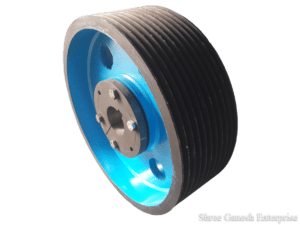
If you are purchasing a Taper Lock Pulley for a conveyor system, your selection directly impacts belt performance, torque transmission, downtime, and long-term operating cost. This guide is designed specifically for buyers, procurement teams, conveyor manufacturers, and plant maintenance managers who require technical clarity before placing an order.
A pulley must be selected based on engineering compatibility — not just availability or price.
Key Technical Parameters Buyers Must Confirm
Before requesting a quotation, ensure you have the following details ready:
- Shaft diameter (in mm)
- Keyway dimensions
- Belt section type (SPA, SPB, SPC, SPZ, A, B, C)
- Required pulley outer diameter
- Number of grooves
- Operating RPM
- Motor power (HP or kW)
- Load type (light / medium / heavy duty)
- Working environment (dusty, humid, high temperature)
Providing incomplete specifications may lead to incorrect sizing and operational issues.
Technical Specification Overview
| Parameter | Description | Buyer Importance |
|---|---|---|
| Material Grade | FG 200 Cast Iron / SG Iron | Determines strength & durability |
| Groove Profile | SPA, SPB, SPC, SPZ, A, B, C | Must match belt section |
| Bore Type | Taper Lock Bush Fit | Ensures secure shaft mounting |
| Balancing | Static / Dynamic Balanced | Reduces vibration |
| Surface Finish | Painted / Anti-corrosion | Protects in harsh environments |
| Groove Count | Single / Multi-groove | Based on load requirement |
Conveyor Type vs Pulley Selection
Different conveyor systems demand different pulley configurations. Buyers should match pulley design with application type.
Light-Duty Belt Conveyors
Used in packaging units, warehouses, and assembly lines.
- Moderate pulley diameter
- Single or double groove
- Lower torque requirement
- Emphasis on smooth rotation
Inclined Conveyors
Used for lifting materials vertically or at an angle.
- Higher torque demand
- Multi-groove pulley recommended
- Strong taper lock grip required
- Larger hub preferred for stability
Heavy-Duty Mining & Cement Conveyors
- Large diameter pulleys
- Multi-groove configuration
- High-grade cast iron or SG iron
- Dynamic balancing mandatory
- Designed for continuous operation
How Pulley Diameter Impacts Performance
| Pulley Diameter | Effect on Conveyor |
|---|---|
| Smaller Diameter | Higher belt speed, compact design |
| Larger Diameter | Better torque handling, longer belt life |
| Incorrect Size | Slippage, excessive belt wear, inefficiency |
Buyers should always calculate belt speed and torque before finalizing diameter.
Advantages of Choosing a Taper Lock Pulley
- Uniform shaft grip without excessive stress
- Easy installation and removal
- No shaft damage during dismantling
- Reduced maintenance downtime
- Improved torque transmission
- Standardized bush system availability
- Lower long-term operational cost
Common Buying Mistakes to Avoid
- Selecting pulley without confirming belt section
- Ignoring RPM and torque calculation
- Overlooking balancing requirements
- Choosing incorrect bush size
- Prioritizing low cost over machining accuracy
These mistakes can result in vibration, shaft wear, bearing damage, and frequent belt replacement.
Cost vs Long-Term Value Comparison
| Low-Quality Pulley | Precision-Engineered Pulley |
|---|---|
| Cheaper initially | Slightly higher initial cost |
| Poor groove accuracy | Accurate belt seating |
| High vibration | Smooth rotation |
| Frequent maintenance | Long service life |
| Higher downtime | Reduced operational interruptions |
For industrial buyers, total ownership cost is more important than initial purchase price.
Buyer FAQs
What details should I share when requesting pricing?
Shaft diameter, belt type, pulley diameter, groove number, RPM, motor power, application type, and quantity required.
How do I ensure shaft compatibility?
Match the shaft diameter with the correct taper lock bush size. Confirm keyway dimensions as well.
Is dynamic balancing necessary?
Yes, especially for medium and high-speed conveyors to prevent vibration and mechanical damage.
Can I order custom sizes?
Yes, pulleys can be manufactured in specific diameters, groove counts, and material grades based on project needs.
How do I determine if it is suitable for heavy-duty use?
Check material grade, hub thickness, groove machining accuracy, and balancing quality.
Final Advice for Buyers
When purchasing a taper lock pulley for conveyor systems, focus on technical compatibility, durability, and machining precision. A properly selected pulley:
- Improves conveyor efficiency
- Reduces belt slippage
- Minimizes vibration
- Protects shafts and bearings
- Decreases maintenance downtime
A taper lock pulley is a critical drive component. Selecting the right one ensures stable conveyor operation and long-term reliability in your industrial setup.
