
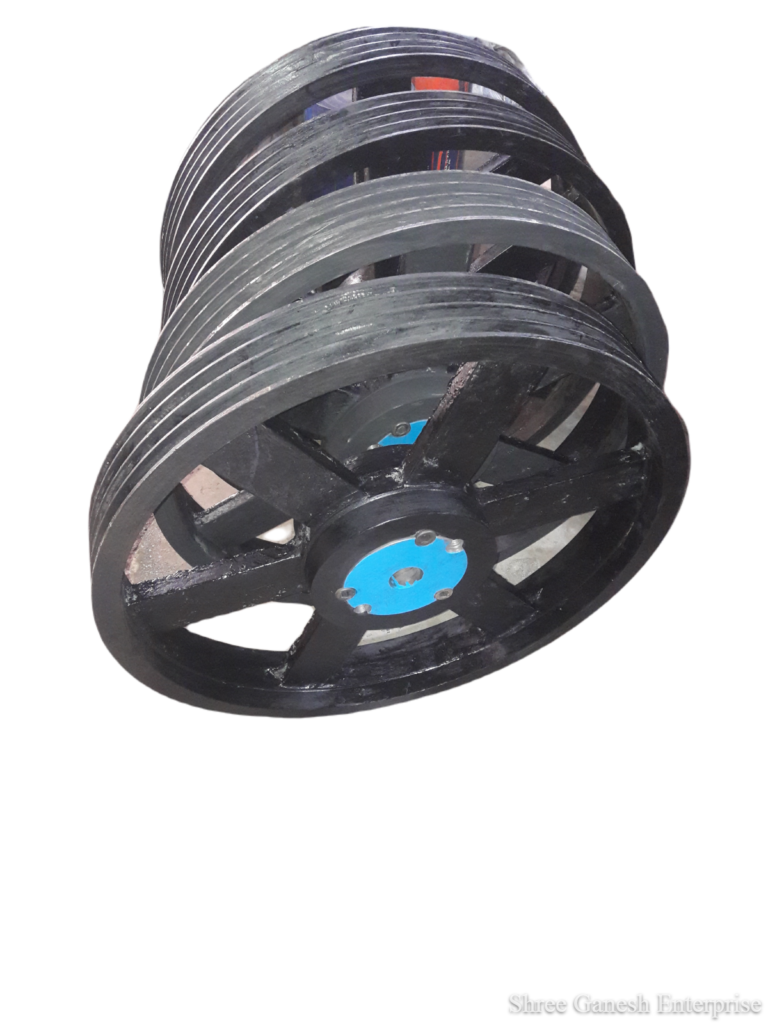
In HVAC applications, pulley selection directly impacts airflow stability, vibration levels, bearing life, and energy consumption. For AHUs, cooling towers, ventilation blowers, and exhaust systems, the Taper Lock Pulley must be selected based on operating speed, load conditions, and environmental exposure — not just diameter.
This guide is written specifically for HVAC buyers who are finalizing specifications or placing project orders.
Why Pulley Selection is Critical in HVAC Projects
HVAC systems typically operate:
- 8–24 hours per day
- At motor speeds of 960, 1440, or 2880 RPM
- Under continuous belt tension
- In dusty, humid, or high-temperature environments
A wrong pulley selection results in:
- Airflow imbalance
- High vibration in AHU casing
- Bearing overheating
- Increased motor current draw
- Premature belt failure
In commercial buildings and industrial plants, this leads to high maintenance costs and tenant complaints due to noise.
Key Technical Factors for HVAC Buyers
1. RPM & Dynamic Balancing
Most AHU and blower motors run at:
- 1440 RPM (4-pole motor)
- 2880 RPM (2-pole motor)
For speeds above 1500 RPM:
- Dynamically balanced pulleys are strongly recommended.
- Poor balancing increases vibration in fan shafts and damages bearings.
For critical installations like hospitals or commercial towers, balancing quality becomes extremely important.
2. Airflow (CFM) & Pulley Ratio Accuracy
Airflow in HVAC systems depends on correct fan speed.
Fan RPM = (Motor Pulley Diameter ÷ Fan Pulley Diameter) × Motor RPM
Even a small diameter variation can cause:
- 5–10% airflow variation
- Overloading of motor
- Higher power consumption
Precision-machined outer diameter and accurate groove geometry are essential for airflow consistency.
3. Multi-Groove Requirement for Heavy HVAC Units
For:
- Large AHUs
- Cooling tower fans
- Industrial ventilation systems
Multi-groove pulleys (2–8 grooves) are preferred because:
- Load is distributed across multiple belts
- Belt life increases
- Slippage reduces
- Torque handling improves
Single-groove pulleys are typically used only for smaller ventilation units.
4. Cast Iron Grade for Continuous Operation
HVAC pulleys must withstand:
- Continuous load
- Belt tension pressure
- Thermal expansion
Recommended material:
- FG200 or FG250 grade cast iron
Low-grade casting can cause:
- Hub cracking
- Groove deformation
- Imbalance during rotation
Material consistency is critical for project supply.
5. Environmental Conditions (Cooling Towers & Industrial HVAC)
Cooling tower applications involve:
- High humidity
- Water exposure
- Corrosive atmosphere
For such environments:
- Proper surface coating or phosphate finish is recommended
- Ensure casting is free from porosity
- Hub thickness should be sufficient for torque load
For dusty industrial environments, groove finish quality prevents belt wear.
6. Shaft Compatibility & Bush Selection
Common HVAC shaft sizes include:
- 24 mm
- 28 mm
- 38 mm
- 42 mm
- 48 mm
- 55 mm
Correct bush selection ensures:
- Strong concentric locking
- Reduced shaft wear
- Easy future maintenance
Interchangeable bush systems reduce project inventory requirements.
Installation Practices That Affect HVAC Performance
Improper installation can reduce pulley life by 40–60%.
Ensure:
- Shaft alignment using straight edge or laser alignment tool
- Even tightening of bush screws
- Correct torque values
- Proper belt tension (not over-tightened)
- Rechecking alignment after 24 hours of operation
Misalignment is one of the biggest causes of vibration in AHUs.
Impact on Energy Efficiency
A properly selected and aligned Taper Lock Pulley provides:
- Reduced belt slippage
- Lower motor current
- Stable airflow
- Reduced heat generation
- Lower long-term electricity bills
In large HVAC systems, even 3–5% efficiency improvement significantly reduces annual operating costs.
HVAC-Specific Applications
These pulleys are commonly used in:
- Air Handling Units (Supply & Return Fans)
- Cooling Tower Fan Drives
- Basement Ventilation Systems
- Industrial Exhaust Blowers
- Fresh Air Units
- Chilled Water Plant Ventilation
Each application requires different load and balancing considerations.
What HVAC Buyers Should Verify Before Placing Order
Before confirming purchase, check:
- Belt section compatibility (SPZ / SPA / SPB / SPC)
- Groove accuracy
- Outer diameter tolerance
- Balancing standard
- Cast iron grade
- Availability of matching taper bush
- Batch consistency for large projects
- Lead time for bulk supply
For OEMs and contractors, dimensional consistency across multiple units is critical.
Project & Bulk Supply Considerations
For commercial HVAC projects:
- Ensure supplier can maintain same dimensions across batches
- Confirm production capacity for large orders
- Verify inspection and quality control process
- Check readiness for urgent dispatch
Reliability of supply is as important as product quality in time-bound projects.
Final Note for Decision-Makers
In HVAC systems, the pulley directly influences airflow accuracy, vibration level, bearing life, and power consumption. Selecting based on correct RPM, load requirement, balancing quality, and material grade ensures long-term performance and reduced maintenance.
For technical assistance, bulk supply, and project-based requirements of precision Taper Lock Pulleys specifically manufactured for HVAC applications, contact Shree Ganesh Enterprise.
