
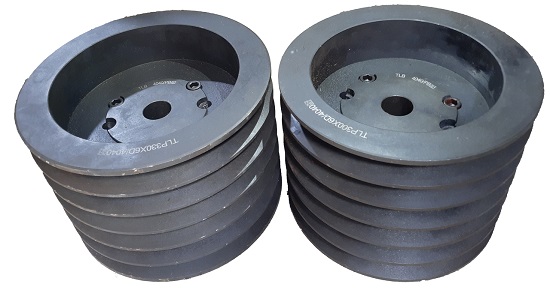
Selecting the correct groove type is critical for efficient power transmission, and Shree Ganesh Enterprise always emphasizes that wrong groove selection can lead to belt slipping, vibration, and premature wear. SPA, SPB, SPC, and SPZ are standardized V-belt profiles, and each one is designed for specific load capacities and applications. Understanding how to identify the correct groove type ensures proper belt seating and long service life.
Why Groove Type Matters
The groove profile of a pulley must match the belt cross-section exactly. If the belt and groove do not match:
- Power transmission efficiency reduces
- Belt life shortens
- Excess heat builds up
- Slippage increases
- Vibration may occur
Correct matching ensures maximum contact between belt and pulley, allowing proper torque transfer.
Step 1: Identify the Belt Section
The easiest way to determine groove type is by checking the belt marking. Most V-belts are printed with their section type.
Common sections include:
- SPZ
- SPA
- SPB
- SPC
If the marking is not visible, measure the belt dimensions.
Step 2: Measure Belt Top Width and Height
Each belt section has standard dimensions.
Typical approximate dimensions:
- SPZ – Smaller profile, used for light-duty applications
- SPA – Medium-light duty
- SPB – Medium-heavy duty
- SPC – Heavy-duty, high power transmission
Measure:
- Top width of the belt
- Belt height
Compare the measurements with standard belt size charts to determine the correct profile.
Step 3: Understand Load and Power Requirements
Each groove type is designed for specific load ranges.
- SPZ: Light loads and compact drives
- SPA: Moderate loads
- SPB: Higher torque applications
- SPC: Heavy-duty and high-power drives
Using a smaller profile in a high-load system leads to belt failure. Oversizing unnecessarily increases cost and space.
Step 4: Check Existing Pulley Marking
Many pulleys have groove type markings stamped on the hub. Look for indications such as:
- SPA-3
- SPB-4
- SPC-2
The number usually indicates the number of grooves.
If replacing an existing pulley, matching the stamped groove type is the safest method.
Step 5: Verify Groove Angle and Dimensions
Standard V-belt pulleys follow defined groove angles and depths. If you are manufacturing or ordering new pulleys:
- Confirm groove angle compliance
- Verify pitch diameter
- Ensure proper groove spacing
Precision machining ensures proper belt seating and prevents uneven wear.
Step 6: Consider Speed and Application Environment
High-speed systems and heavy industrial environments may require stronger belt sections like SPB or SPC.
Factors influencing selection:
- Motor power
- RPM
- Shock load
- Continuous duty cycle
- Ambient conditions
Always calculate torque before finalizing groove type.
Common Mistakes to Avoid
- Selecting groove type based only on diameter
- Ignoring motor power
- Mixing belt sections in multi-belt drives
- Using worn belts for measurement reference
Accurate identification prevents repeated belt replacement and operational inefficiency.
Quick Reference Guide
- For compact, light-duty machines → SPZ
- For moderate industrial drives → SPA
- For medium-heavy conveyors and compressors → SPB
- For heavy-duty crushers and large drives → SPC
Final selection should always align with load calculation and belt specifications.
Final Thoughts
Identifying the correct groove type is not complicated, but it must be precise. Matching SPA, SPB, SPC, or SPZ correctly ensures efficient power transfer, reduced maintenance, and longer belt life.
When in doubt, confirm belt dimensions, check motor specifications, and review application load conditions before ordering a new pulley. Proper selection today prevents performance issues tomorrow.
