
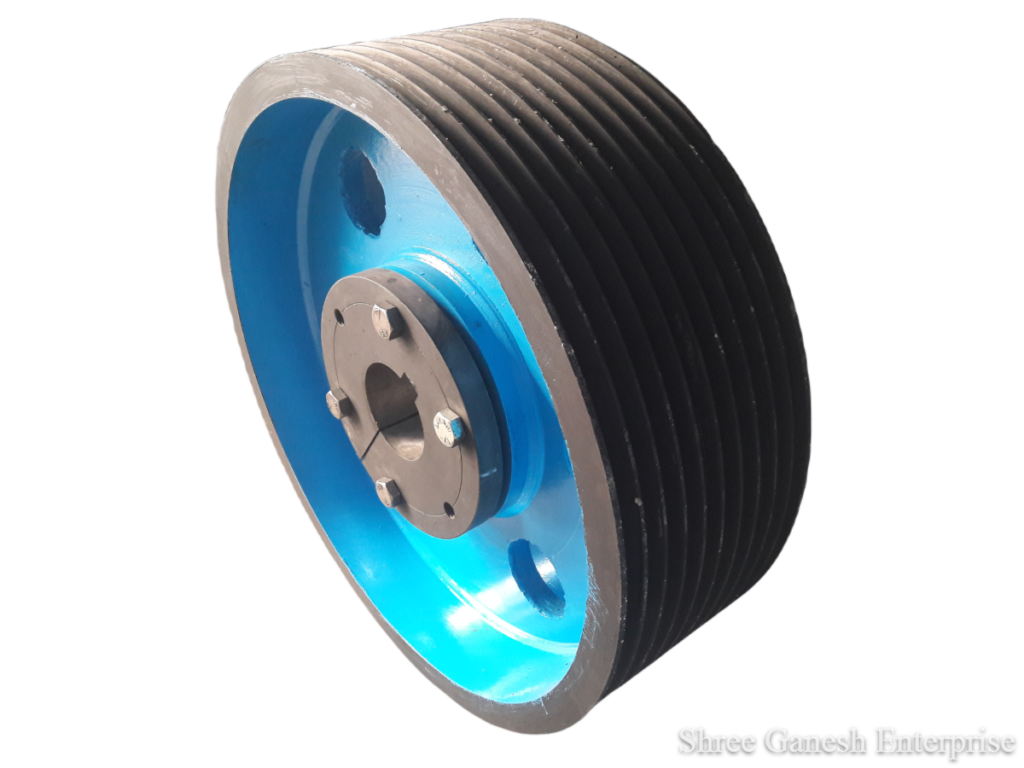
When selecting taper lock pulleys for industrial applications, quality is not just about material or appearance. It is about compliance with recognized standards. ISO and other industry standards ensure that pulleys are dimensionally accurate, mechanically reliable, and compatible across global systems.
Understanding these standards helps buyers make informed decisions and avoid performance issues caused by non-standard components.
Why Standards Matter in Power Transmission
Industrial power transmission systems operate under load, speed, and environmental stress. If pulleys are not manufactured according to standardized dimensions and tolerances, the following issues may occur:
- Improper belt seating
- Misalignment
- Excessive vibration
- Reduced belt life
- Shaft or keyway damage
Standards create uniformity so that pulleys, belts, bushes, and shafts fit correctly and perform reliably.
ISO Standards Relevant to Taper Lock Pulleys
Although there is no single ISO document exclusively titled “Taper Lock Pulley Standard,” several ISO standards govern the dimensions, tolerances, and performance of related components.
ISO Standards for V-Belt Pulleys
ISO standards define:
- Groove profiles
- Groove angles
- Pitch diameters
- Belt sections (SPA, SPB, SPC, etc.)
- Dimensional tolerances
These standards ensure that V-belts sit correctly inside pulley grooves and transmit power efficiently.
ISO Tolerances for Shafts and Bores
Shaft and bore fits follow ISO tolerance systems such as:
- H7 bore tolerance
- h6 shaft tolerance
These ensure proper interference or clearance fits between the shaft and taper bush system. Incorrect tolerances can lead to slippage or difficulty during installation.
DIN Standards and Their Importance
DIN (German Institute for Standardization) standards are widely referenced in mechanical power transmission.
DIN standards commonly define:
- Taper bush dimensions
- Keyway dimensions
- Screw sizes
- Mounting specifications
Many taper lock bush systems globally are based on DIN dimensional standards, ensuring interchangeability between manufacturers.
IS (Indian Standards) Compliance
In India, taper lock pulleys and related components may follow BIS (Bureau of Indian Standards) specifications aligned with ISO or DIN guidelines.
IS standards typically address:
- Material grade requirements
- Casting quality
- Mechanical properties
- Dimensional accuracy
Compliance with IS standards ensures consistency in domestic industrial applications.
Material and Mechanical Property Standards
Standards also cover material specifications such as:
- Cast iron grade (for example, FG200 or equivalent)
- Tensile strength requirements
- Hardness range
- Surface finish quality
Material compliance directly affects load capacity, durability, and resistance to wear.
Balancing Standards
For high-speed applications, pulleys may be dynamically balanced according to recognized balancing grades.
Balancing standards define:
- Acceptable vibration limits
- Maximum residual imbalance
- Operating speed limits
Proper balancing reduces bearing wear and increases system life.
Keyway and Fastener Standards
Keyways and mounting screws must also follow standardized dimensions to ensure safe torque transmission.
Standards specify:
- Key dimensions (width and height)
- Tolerances
- Screw grades
- Tightening torque guidelines
Ignoring these specifications may lead to premature mechanical failure.
Why Buyers Should Verify Standard Compliance
Before purchasing taper lock pulleys, buyers should confirm:
- Groove profile standard
- Bush compatibility
- Shaft and bore tolerance
- Material grade compliance
- Balancing requirement (if high RPM application)
A pulley manufactured outside standard tolerances may initially appear acceptable but can create long-term operational issues.
Conclusion
ISO and industry standards are the foundation of reliable power transmission systems. They ensure dimensional consistency, safe torque transfer, proper belt alignment, and long service life.
Understanding these standards allows engineers and procurement teams to select taper lock pulleys that deliver consistent performance, reduce maintenance costs, and support long-term operational efficiency.
