
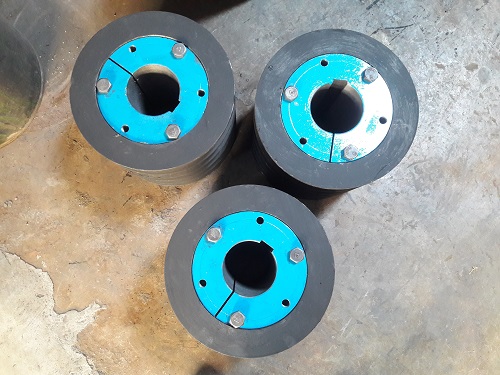
Buying a taper lock pulley is not just a routine purchase — it is a technical decision that directly affects machine reliability, downtime, and maintenance cost. At SHREE GANESH ENTERPRISE, we often see that many pulley-related problems start at the selection stage, not during operation. If you want long service life, stable performance, and fewer breakdowns, avoid these common buying mistakes.
1. Skipping Proper Load & Torque Calculation
One of the most common mistakes is selecting a pulley based only on previous usage or visual size.
Buyers often ignore:
- Motor power (kW or HP)
- Operating RPM
- Service factor
- Shock load conditions
Without proper torque calculation, the pulley may be undersized, leading to slippage, overheating, and premature failure.
2. Selecting the Wrong Groove Profile
Using an incorrect groove type such as SPZ, SPA, SPB, or SPC causes improper belt seating.
This can result in:
- Reduced power transmission
- Belt slipping
- Excessive heat generation
- Faster belt wear
Always match the pulley groove exactly with the belt section.
3. Assuming Shaft Size Without Measuring
Relying on nominal shaft size without measurement is risky.
Even a small deviation can cause:
- Loose bush grip
- Installation difficulty
- Vibration
- Shaft damage
Always measure the shaft diameter accurately before ordering the taper lock bush.
4. Ignoring Service Factor in Heavy-Duty Applications
Applications such as conveyors, crushers, mixers, and compressors involve shock loads and frequent start-stop cycles.
Selecting a pulley based only on nominal load may cause early failure under real operating conditions.
Service factor ensures the pulley can handle dynamic stresses.
5. Buying Based Only on Lowest Price
Choosing the cheapest option without evaluating quality can increase long-term costs.
Low-cost pulleys may compromise on:
- Material grade
- Casting integrity
- Groove accuracy
- Dimensional tolerances
The savings at purchase often turn into maintenance and downtime expenses later.
6. Not Verifying Bush Compatibility
A taper lock pulley must match the correct bush series.
Common mistakes include:
- Ordering pulley without confirming bush number
- Using mismatched bush and hub
- Ignoring bore tolerance
Improper compatibility leads to unstable mounting and unsafe torque transmission.
7. Overlooking Balancing for High-Speed Systems
In high RPM applications, balancing is critical.
If ignored:
- Vibration increases
- Bearings wear faster
- Noise levels rise
- Machine stability reduces
Always confirm balancing requirements for high-speed operations.
8. Ignoring Installation Space and Center Distance
Larger pulleys improve belt life but may not fit within available installation space.
Before ordering, check:
- Center distance
- Shaft overhang limits
- Clearance from nearby components
Space constraints should always be considered during selection.
9. Not Requesting Quality Documentation
For industrial or bulk purchases, documentation ensures consistency.
Buyers should request:
- Material test certificates
- Inspection reports
- Dimensional verification
Quality documentation reduces risk in larger orders.
10. Failing to Plan for Future Maintenance
Selecting non-standard components without considering spare availability can increase downtime during replacement.
Standardized pulleys simplify:
- Spare management
- Future procurement
- Maintenance planning
Planning ahead prevents operational disruption.
Final Thoughts
Most taper lock pulley issues originate from improper purchasing decisions rather than manufacturing defects. Verifying torque, groove type, shaft size, and compatibility before ordering ensures reliable performance and long-term durability.
A careful and technically informed purchase protects your equipment, reduces downtime, and improves overall operational efficiency.
