
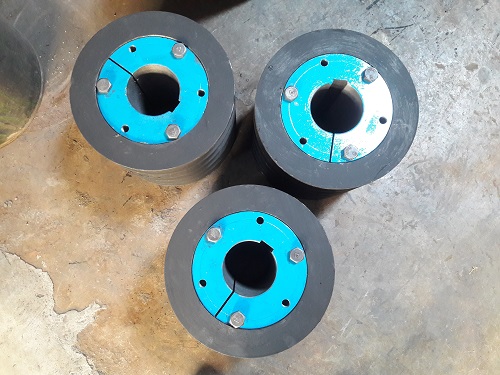
Taper lock pulleys are designed for strength, precision, and easy installation. However, like any mechanical component, they can fail if selected incorrectly, installed improperly, or maintained poorly. Understanding the most common failure types helps prevent downtime, reduce repair costs, and extend equipment life.
Below are the typical taper lock pulley failures and practical steps to avoid them.
1. Pulley Slippage on Shaft
Why It Happens
- Incorrect bush size
- Improper tightening torque
- Worn key or keyway
- Oil or grease on shaft during installation
Slippage leads to vibration, heat generation, and eventual shaft damage.
How to Avoid It
- Use the correct taper bush size for the shaft
- Tighten screws evenly using recommended torque values
- Ensure shaft and bush surfaces are clean before mounting
- Inspect key and keyway condition
Proper installation is the first defense against slippage.
2. Excessive Vibration
Why It Happens
- Pulley imbalance
- Misalignment
- Uneven tightening of bush screws
- Worn bearings
Vibration accelerates wear on belts, bearings, and shafts.
How to Avoid It
- Choose dynamically balanced pulleys for high-speed applications
- Check shaft alignment during installation
- Tighten screws in a cross pattern
- Inspect and maintain bearings regularly
Balanced rotation ensures longer system life.
3. Groove Wear and Belt Slippage
Why It Happens
- Incorrect belt section
- Over-tightened belts
- Abrasive operating environment
- Continuous overload conditions
Worn grooves reduce traction and cause belt heating.
How to Avoid It
- Match groove profile (SPA, SPB, SPC, etc.) with belt type
- Maintain proper belt tension
- Perform routine visual inspections
- Replace worn belts promptly
Correct belt selection significantly improves pulley lifespan.
4. Cracking of Pulley Body
Why It Happens
- Poor material quality
- Casting defects
- Excessive shock load
- Over-tightening of bush screws
Cracks can propagate and cause sudden failure.
How to Avoid It
- Use pulleys manufactured from certified material grades
- Avoid excessive tightening beyond recommended torque
- Select pulley size based on proper load calculation
- Inspect casting quality before installation
Material quality and correct sizing are critical.
5. Keyway Damage
Why It Happens
- Improper key fit
- Loose bush connection
- Repeated start-stop cycles
- High shock loads
A damaged keyway affects torque transmission.
How to Avoid It
- Ensure correct key dimensions
- Avoid excessive play between key and keyway
- Apply proper tightening torque
- Inspect during periodic maintenance
Maintaining key integrity protects the shaft and pulley.
6. Difficulty During Removal
Why It Happens
- Corrosion between shaft and bush
- Over-tightening
- Lack of anti-seize application
- Improper removal technique
Forced removal often damages the shaft.
How to Avoid It
- Apply light anti-seize coating during installation
- Use designated jacking holes for removal
- Avoid hammering
- Keep shaft surface clean
Correct removal technique prevents long-term damage.
7. Bearing Overload
Why It Happens
- Excessive belt tension
- Misalignment
- Pulley overhang on shaft
- Improper balancing
Bearing failure indirectly affects pulley performance.
How to Avoid It
- Maintain proper belt tension
- Ensure alignment accuracy
- Minimize overhung loads
- Monitor vibration regularly
Healthy bearings support stable pulley operation.
Preventive Maintenance Checklist
To minimize failures:
- Inspect visually every month
- Check screw tightness quarterly
- Monitor vibration and noise
- Maintain proper belt tension
- Clean pulley and shaft surfaces
- Replace worn components promptly
Preventive maintenance is far less expensive than reactive repair.
Final Thoughts
Most taper lock pulley failures are not due to design flaws but improper selection, installation, or maintenance. By focusing on correct torque calculation, proper alignment, quality material selection, and regular inspection, you can significantly reduce unexpected breakdowns.
A systematic maintenance approach ensures reliable power transmission, extended component life, and reduced downtime across your operations.
