
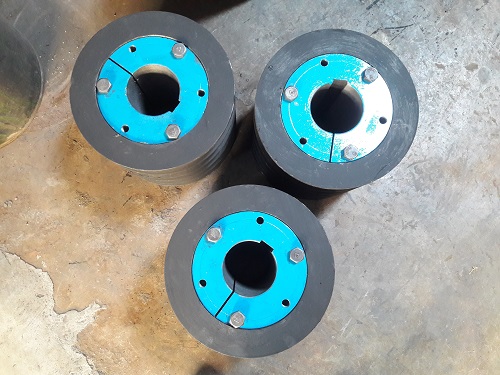
Understanding how taper lock pulley pricing is calculated helps buyers make informed decisions, negotiate better, and plan procurement budgets effectively. Pricing is not random. It is a combination of material cost, manufacturing processes, specifications, and market factors.
This guide explains pricing from a buyer’s perspective with clarity and transparency, especially when working with a reliable taper lock pulley manufacturer.
Key Components of Taper Lock Pulley Pricing
The total price of a taper lock pulley is derived from multiple cost elements:
| Cost Component | Description | Impact on Price |
|---|---|---|
| Raw Material | Cast Iron (FG200, FG250), Steel | Major cost driver |
| Weight of Pulley | Based on size and design | Higher weight increases cost |
| Machining Cost | Turning, drilling, groove cutting | More operations increase cost |
| Taper Lock Bush Fitment | Precision bore and keyway | Adds accuracy cost |
| Surface Finishing | Painting, phosphating | Adds minor cost |
| Balancing | Static or dynamic | Dynamic increases cost |
| Quantity Ordered | Bulk vs small orders | Bulk reduces per unit cost |
| Packaging and Logistics | Transport, handling | Depends on distance |
Pricing Formula (Simplified)
While exact formulas vary, buyers can understand pricing broadly as:
Total Price = Material Cost + Machining Cost + Finishing Cost + Overheads + Margin
Example Breakdown
| Component | Approx Contribution |
|---|---|
| Material | 50 to 65 percent |
| Machining | 20 to 30 percent |
| Finishing | 5 to 10 percent |
| Overheads | 5 to 10 percent |
| Margin | 10 to 20 percent |
Technical Specifications That Affect Pricing
| Specification | Options | Pricing Impact |
|---|---|---|
| Pulley Type | SPA, SPB, SPC, SPZ | Larger profiles cost more |
| Number of Grooves | Single to Multi-groove | More grooves increase machining |
| Diameter Size | Small to large | Bigger size increases material |
| Material Grade | FG200 vs FG250 | Higher grade costs more |
| Bore Type | Taper Lock or Pilot Bore | Taper lock adds precision cost |
| Balancing | Static or Dynamic | Dynamic adds extra cost |
Buyer Scenarios for Better Understanding
Scenario 1: Small Standard Pulley
Type: SPA single groove
Material: FG200
Quantity: 10 pcs
Price Insight: Lower cost due to less material and minimal machining.
Scenario 2: Medium Multi-Groove Pulley
Type: SPB 3 groove
Material: FG250
Quantity: 100 pcs
Price Insight: Moderate pricing with benefit of bulk discount.
Scenario 3: Large Custom Pulley
Type: SPC 5 groove
Material: High grade cast iron
Requirement: Dynamic balancing
Price Insight: Higher cost due to size, machining complexity, and balancing.
Factors That Reduce Pricing for Buyers
• Ordering in bulk quantities
• Choosing standard sizes instead of custom designs
• Finalizing specifications in advance
• Long-term supplier relationships
• Flexible delivery timelines
Factors That Increase Pricing
• Urgent or emergency orders
• Custom designs or special machining
• Small quantity orders
• Frequent specification changes
• Higher material grades
Hidden Costs Buyers Should Consider
| Hidden Factor | Impact |
|---|---|
| Rework due to wrong specs | Increases total cost |
| Delayed delivery | Production loss |
| Poor quality | Replacement cost |
| Improper balancing | Machine damage risk |
Frequently Asked Questions
What is the biggest cost factor in pulley pricing?
Raw material cost is the largest contributor, often accounting for more than half of the total price.
Does weight directly affect price?
Yes, heavier pulleys require more material, increasing cost.
Are taper lock pulleys more expensive than pilot bore?
Yes, due to precision machining and standardization benefits.
How can buyers get the best price?
Order in bulk, choose standard specifications, work with reliable manufacturers, and plan orders in advance.
Does surface finishing affect pricing significantly?
No, it has a minor impact compared to material and machining.
Final Thoughts
From a buyer’s perspective, understanding pricing helps avoid overpaying and ensures better value for money.
Taper lock pulley pricing is a balance between material, machining, precision, and volume. The right supplier will always provide transparent pricing aligned with quality and reliability.
At Shree Ganesh Enterprise, we believe in clear pricing structures so that buyers can make confident and cost-effective decisions.
A well-informed buyer is always in a stronger position to optimize both cost and performance.
