
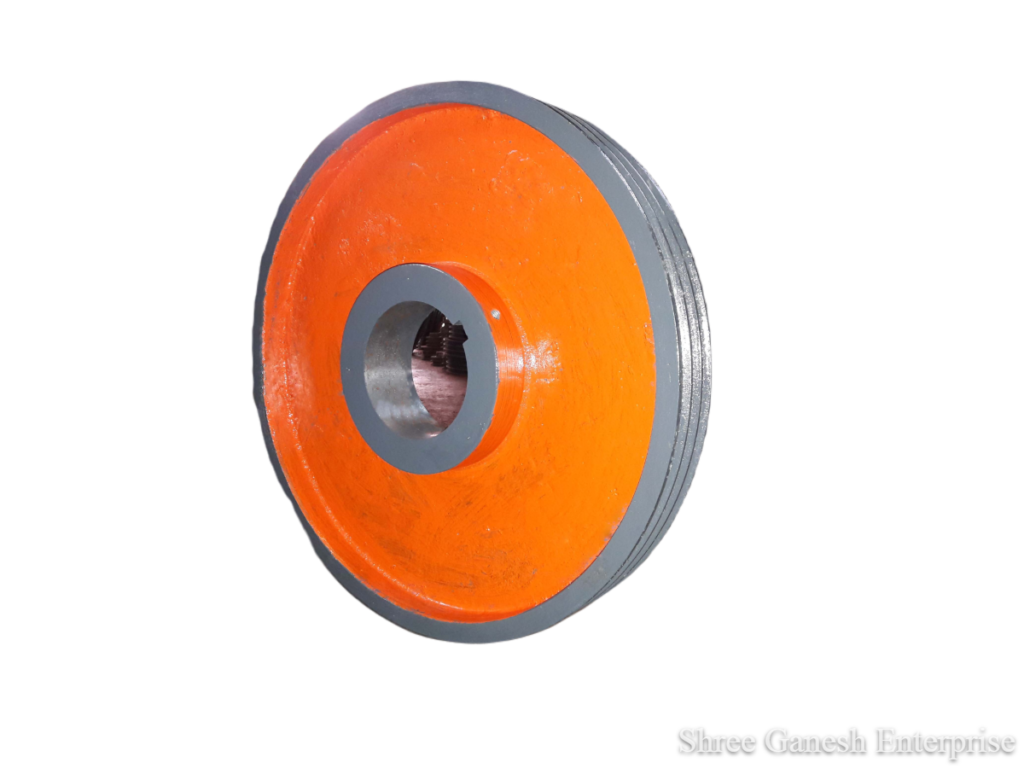
Selecting the correct belt section is one of the most important steps when choosing a V-belt pulley. A mismatch between belt and pulley can lead to slippage, poor power transmission, and frequent failures.
From a buyer’s perspective, identifying the right belt section ensures proper fitment, longer belt life, and efficient machine performance.
What Is a Belt Section?
A belt section refers to the cross-sectional size and profile of the V-belt. Each section is designed to fit a specific pulley groove profile.
Common sections include:
• Classical: A, B, C
• Narrow (metric): SPA, SPB, SPC
Standard Belt Section Dimensions
| Belt Section | Top Width (mm) | Height (mm) | Type |
|---|---|---|---|
| A | 13 | 8 | Classical |
| B | 17 | 11 | Classical |
| C | 22 | 14 | Classical |
| SPA | 12.7 | 10 | Narrow |
| SPB | 16.3 | 13 | Narrow |
| SPC | 22 | 18 | Narrow |
Each belt section requires a matching pulley groove.
How to Identify the Correct Belt Section
1. Check Existing Belt Marking
Most V-belts have markings printed on them.
Examples:
• A 42 → A section
• SPB 2000 → SPB section
This is the easiest and most reliable method.
2. Measure Belt Dimensions
If marking is not visible, measure:
• Top width
• Belt height
Then match with the standard table above.
3. Check Pulley Groove Profile
Inspect the pulley:
• Groove width and angle
• Depth of groove
Each pulley is designed for a specific belt section. Never mix sections.
4. Refer to Machine Specifications
OEM manuals often specify:
• Belt type
• Section
• Length
Always follow manufacturer recommendations.
Quick Selection Guide
| Application Type | Recommended Section |
|---|---|
| Light Duty Machines | A or SPA |
| Medium Duty | B or SPB |
| Heavy Duty | C or SPC |
Key Differences Between Classical and Narrow Belts
| Feature | Classical (A, B, C) | Narrow (SPA, SPB, SPC) |
|---|---|---|
| Design | Older standard | Modern, compact |
| Power Capacity | Moderate | Higher |
| Efficiency | Lower | Better |
| Space Requirement | More | Less |
Narrow belts are generally preferred for modern machinery.
Real Buyer Scenarios
Scenario 1: Wrong Belt Section Used
Buyer installs A section belt on SPB pulley
Result: Slippage and fast wear
Scenario 2: Belt Not Identifiable
Old belt has no marking
Solution: Measure width and height to identify section
Scenario 3: Upgrading Machine
Buyer shifts from B to SPB section
Result: Improved efficiency and compact design
Common Mistakes Buyers Should Avoid
• Mixing classical and narrow belt sections
• Selecting based on size without checking profile
• Ignoring pulley compatibility
• Using worn-out pulleys with new belts
Buyer Checklist
Before finalizing, confirm:
• Belt section (A, B, C, SPA, SPB, SPC)
• Pulley groove compatibility
• Application load requirement
• Belt length and quantity
Working with a knowledgeable V-belt pulley manufacturer helps ensure you get the correct pulley design matched to your belt section and application.
Frequently Asked Questions
Can I use SPA belt on A section pulley?
No, both have different profiles and are not interchangeable.
Which is better: classical or narrow belts?
Narrow belts (SPA, SPB, SPC) are more efficient and compact.
How do I identify belt section without marking?
Measure the belt width and height and match with standard dimensions.
Does belt section affect performance?
Yes, it directly impacts load capacity and efficiency.
Can I change belt section in existing machine?
Only if pulley is also changed to match the new section.
Final Thoughts
Choosing the correct belt section is critical for the performance and life of your V-belt pulley system.
From a buyer’s perspective, the right selection ensures:
• Proper fitment
• Efficient power transmission
• Reduced maintenance
• Longer service life
At Shree Ganesh Enterprise, we guide buyers in selecting the correct belt and pulley combinations based on exact application requirements.
The right belt section is not just a specification—it is the foundation of a reliable drive system.
